



Plenary Industry Talks
Distinguished Industry Speaker Plenary Sessions for the 2026 IEEE AP-S/USNC-URSI Symposium
The IEEE Antennas and Propagation Society (AP-S) is proud to present the Distinguished Industry Speaker Plenary Session at the 2026 IEEE International Symposium on Antennas & Propagation and USNC-URSI Radio Science Meeting. This two-hour special event brings together senior technology leaders from the world's leading engineering software and consumer electronics companies to share their vision for the future of AI-driven engineering and design.
The session opens with two 35-minute keynote presentations by distinguished industry speakers, followed by a 30-minute plenary panel discussion on “AI for Engineering and Design” - with a focus on the fields of Antennas, Electromagnetics, Microwaves, and Propagation.
The session also features a keynote presentation by the distinguished industry lead from the Amazon Leo team to discuss the foundations of the Leo system and highlights of the antenna technology developed by the Leo team.
Distinguished Industry Speaker Plenary Session 1
Keynote Presentations

Harmonizing the Physical and Digital Worlds: Driving Product Innovation Through Lifecycle Intelligence
Speaker: Tony Hemmelgarn, President and CEO, Siemens Digital Industries Software
ABSTRACT
The future of product design is being rewritten by advances in Industrial AI. In this keynote, Tony Hemmelgarn discusses the strategic necessity of adopting a comprehensive digital twin to navigate the increasing volatility of global technology demands. The focus shifts from individual physics-based simulation methodologies to an integrated “Adaptive Engineering” environment. By embedding intelligence into every stage of the product lifecycle, from initial product concept to field deployment, we can unlock new levels of performance and sustainability. This talk will highlight real-world applications of lifecycle intelligence, demonstrating how a unified digital strategy enables engineers to solve the most daunting challenges with speed and precision.

Use of HPC, GPUs, AI/ML, and Quantum Computing in Electromagnetics Simulation
Speaker: Prith Banerjee, Senior Vice President of Innovation, Synopsys
ABSTRACT
Electromagnetics Simulation has been used in the area of Antennas and Propagation for the past 50 years. This talk will start with a discussion of how electromagnetics simulation uses numerical methods (finite element, finite volume, finite difference) to solve second order partial differential equations (Maxwell's equations). The challenges in numerical simulation are to get increased accuracy, faster runtimes, ease of use, and convergence; these objectives are often in conflict with one another. We will then discuss four techniques for improving EM simulation. First we will discuss the use of high-performance computing using shared memory and message passing to accelerate EM simulation. Second, we will discuss how the latest GPU technology can be used to exploit fine grain parallelism in EM simulation. Third we will discuss how AI/ML is being used to speed up simulation using surrogate models and foundational models. Fourth, we will discuss the use of quantum computing to accelerate EM simulation in the future. We will conclude the talk by looking at the future of agentic AI workflows in chips to systems with five levels of autonomy which we call “Reengineering Engineering.”
Plenary Panel Discussion - AI for Engineering and Design
Following the keynote presentations, a 30-minute plenary panel discussion will explore the impact and future of “AI for Engineering and Design” in the fields of Electromagnetics, Antennas, Microwaves, and Propagation.
The panel brings together the two keynote speakers alongside Jiang Zhu (Technical Director / Principal Scientist, Meta Reality Labs), who joins as a representative of the consumer electronics industry - offering a user's perspective - and on behalf of the IEEE AP-S Industrial Initiative Committee, which he chairs.
Tony Hemmelgarn
President and CEO,
Siemens Digital Industries Software
Prith Banerjee
SVP Innovation,
Synopsys

Jiang Zhu
Technical Director,
Meta Reality Labs
Keynote Presentation
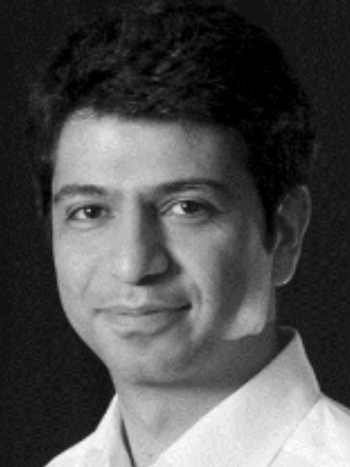
Amazon Leo's Antenna Technology
Speaker: Nima Mahanfar, Director of Engineering - Amazon Leo Customer Terminals and Satellite Payload
ABSTRACT
Amazon Leo is Amazon's low Earth orbit satellite network designed to provide fast, reliable connectivity to customers and communities beyond the reach of existing networks. Designing and proving the performance of powerful, cost-efficient antennas to communicate between Earth and space was fundamental to Amazon's goal of scaling the Leo network to serve tens of millions of customers globally. This talk will present the foundations of the Leo system and highlights of the antenna technology developed by the Leo team, including the phased arrays used on orbit and in low-cost customer terminals.
Distinguished Industry Speaker Plenary Session 2 (Automotive Focus)
Keynote Presentations

Integrated Antenna Design for Automotive and Emerging Smart Platforms
Speaker: Aycan Erentok, Senior Manager of Antenna Engineering, Tesla
ABSTRACT
Modern vehicles and smart platforms require seamless connectivity across a broadband frequency spectrum ranging from kHz to millimeter-wave frequencies, supporting multiple radio technologies including cellular, Wi-Fi, Bluetooth, GNSS, satellite radio, and emerging autonomous driving systems. This talk explores the evolution and implementation of integrated antenna solutions from a personal journey that move beyond conventional concealment approaches to fundamentally reimagine radiation architectures for enhanced connectivity performance.
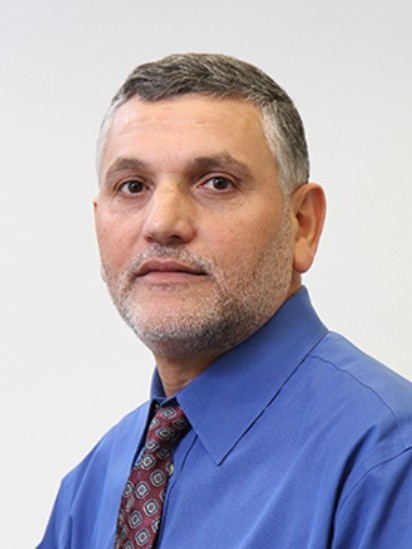
Merging Classical Engineering and Edge AI to Redefine Vehicle Systems
Speaker: Mahmoud Yousef Ghannam, Technical Expert, Ford Motor Company
ABSTRACT
As the automotive industry transitions toward Software-Defined Vehicles (SDVs), rapid advancements in high-performance computing and modern E/E architectures are unlocking unprecedented opportunities to overcome the constraints of traditional physical hardware.
This keynote will explore the critical shift from physical to virtualized sensor fusion within the SDV ecosystem and someand the some of the capabilities it unlocks. At the heart of this transition lies a cutting-edge frontier where classical physics and modern deep learning converge: Physics-Informed Artificial Intelligence (PIAI) for virtual sensing. By embedding first-principles physical laws-such as thermodynamics, fluid dynamics, and kinematics-directly into the loss functions of neural networks, engineers can design "virtual sensors" that are mathematically constrained to physical reali
However, deploying these models at the edge introduces some engineering challenges. This presentation will address some of the hurdles and opportunities. Finally, we will bridge the gap between academic theory and mass-production reality, discussing the commercial implications of these technologies.
All Distinguished Industry Speakers and Panelists
Tony Hemmelgarn
President and CEO, Siemens Digital Industries Software
Tony Hemmelgarn is president and CEO of Siemens Digital Industries Software, where he leads one of the world's most comprehensive industrial software portfolios, helping companies of all sizes transform how they design, build and operate products.
Under his leadership, Siemens has strengthened its position as a global leader in digital transformation-expanding the Siemens Xcelerator portfolio, advancing the comprehensive digital twin, and accelerating the integration of cloud, SaaS and AI to connect engineering, manufacturing and lifecycle operations.
Hemmelgarn has held multiple leadership roles across Siemens Digital Industries Software, including executive vice president of Global Sales, Marketing and Services and senior vice president and managing director for Europe, the Middle East and Africa (EMEA). He has also led U.S. operations and the company's Industry Vertical Organization, working closely with customers across industries to drive adoption of digitalization at scale.
Earlier in his career, Hemmelgarn held leadership roles at Intergraph Corporation, progressing from technical management to director of sales and marketing. He began his career at CAD-CAM Incorporated, where he led the services division. He holds a Bachelor of Science degree in Mechanical Engineering Technology from the University of Dayton.
Prith Banerjee
Senior Vice President of Innovation, Synopsys
BIOGRAPHY
Prith Banerjee is Senior Vice President of Innovation at Synopsys, and a member of the Executive Leadership team. Prior to that, he was CTO of Ansys, CTO of Schneider Electric, CTO of ABB, Managing Director at Accenture, and Director of HP Labs. Previously, he spent 20 years in academia as Professor, Chairman and Dean at the University of Illinois and Northwestern University. In addition, Prith has founded two EDA software companies, Accelchip and Binachip. He has served on the Board of Directors of Cray, CUBIC, and Turntide. He is a Fellow of the AAAS, ACM, IEEE, and the National Academy of Inventors. He received a B.Tech. in electronics engineering from the Indian Institute of Technology, Kharagpur, and an M.S. and Ph.D. in electrical engineering from the University of Illinois, Urbana.
Jiang Zhu
Technical Director / Principal Scientist, Meta Reality Labs
Chair, Industrial Initiative Committee, IEEE Antennas and Propagation Society
BIOGRAPHY
Jiang Zhu is an accomplished engineer, scientist, engineering leader, and IEEE Fellow with over 15 years of experience driving innovation at Meta, Google, and Apple. He currently serves as a Technical Director and Principal Scientist at Meta Reality Labs, where he leads the introduction of new wireless technologies. Previously, he led Google's Wearable Wireless Hardware team, overseeing the development of their first-generation consumer electronics. A prolific inventor, Jiang holds over 100 granted and pending U.S. patents, many of which feature in successful commercial products.
Dedicated to bridging industry and academia, Jiang directs several of Meta's university collaboration programs focused on AI, augmented/virtual reality, and wireless communications. He serves on the Industrial Advisory Boards for the Electrical and Computer Engineering departments at both the University of Toronto and UC San Diego.
Highly active within the research community, Jiang serves on the Industry Ad-Hoc Committee for the Proceedings of the IEEE and has held and completed Senior and Associate Editor roles for six IEEE journals. Additionally, he has chaired the Industrial Initiative Committee and served on the IEEE Fellow Evaluation Committee for the IEEE Antennas and Propagation Society. He earned his Ph.D. from the University of Toronto, his Master's degree from McMaster University, and his Bachelor's degree from Zhejiang University.
Nima Mahanfar
Director of Engineering - Amazon Leo Customer Terminals and Satellite Payload
BIOGRAPHY
Nima Mahanfar, PhD, has been leading Amazon Leo's Antenna team since 2018, when he joined as a founding member of the business, formerly known as Project Kuiper. He has 20+ years of experience leading research and development in RF and antennas at SpaceX, Microsoft, and Nokia. At SpaceX, he was a founding member of the Starlink program, where he built and led the phased array team and developed several generations of antennas for satellite payloads. At Microsoft, as Director of Antennas and RF Engineering, he built and led a center of excellence for antenna and RF development for consumer electronics, such as Xbox and HoloLens products, shipping tens of millions of products. Prior, he held engineering and leadership roles in consumer electronics at Nokia and Sierra Wireless.
Aycan Erentok
Senior Manager of Antenna Engineering, Tesla
BIOGRAPHY
Dr. Aycan Erentok is a Senior Manager of Antenna Engineering at Tesla, where he leads antenna design and wireless system integration across its vehicle and robotics platforms. He has over 20 years of combined research and industry experience in electrically small antennas, full-lifecycle antenna development, electromagnetic integration spanning kHz to mmWave frequencies, and high-volume wireless product development.
He earned his Ph.D. in Electrical Engineering from the University of Arizona, where his research focused on electrically small antennas and metamaterial-based and inspired antenna concepts under the supervision of Professor Richard W. Ziolkowski.
Since joining Tesla in 2017, he has led the development of integrated antenna architectures supporting cellular, Bluetooth, GNSS, FM/DAB, UHF, and radar connectivity systems. His work focuses on body-integrated and hidden antenna solutions that improve system performance, enable industrial design flexibility, and reduce hardware complexity across Tesla vehicle and robotics platforms. His body-integrated connectivity architecture, first introduced in the Model Y program, has since become a standard antenna integration approach across Tesla vehicle platforms.
Prior to Tesla, Dr. Erentok held antenna engineering leadership roles at Intel and Nokia, where he contributed to antenna technologies deployed in tens of millions of mobile and wearable devices.
Mahmoud Yousef Ghannam
Technical Expert in Research and Advanced Engineering at Ford Motor Company
BIOGRAPHY
Dr. Mahmoud Yousef Ghannam is a Technical Expert in Research and Advanced Engineering at Ford Motor Company. He holds a Bachelor’s, Master’s, and Doctoral Degree in Mechanical Engineering from the University of Detroit, and a Master’s Degree in Electrical Engineering from the University of Michigan. His research interests include advanced safety systems, sensor fusion techniques, nanotechnology development, V2X and AI/ML applications. With a passion for research, innovation, and teaching, he has served as an Adjunct Professor for over two decades at universities in the U.S. and internationally. His academic service includes acting as an external committee member for multiple PhD students and chairing several conferences. Dr. Ghannam is a prolific inventor and author, holding over 600 patents and publications worldwide.