



Defense Technology Panel
Featured Luncheon Panel: Antenna Systems for Contested Electromagnetic Operations
The IEEE International Symposium on Antennas & Propagation and North American Radio Science Meeting, taking place in Detroit, MI, USA, is proud to announce the 2nd annual lunchtime defence technology panel! This year's theme is "Antenna Systems for Contested Electromagnetic Operations." This highly anticipated discussion brings together 5 distinguished panelists from industry and government defence research labs across North America to explore how advanced antenna systems are being designed, validated, and operated in contested electromagnetic environments. The panel will be moderated by Prof. Ashwin K. Iyer, Director of the Centre for Applied Research in Defence and Dual-use Technologies (CARDD-Tech) at the University of Alberta.
Lunch will be provided for all attendees. The event is also sponsored by the IEEE AP-S Technical Committee on Security, Defense, and Disaster Management (TC 9).
Don't miss this opportunity to engage with top minds and explore the future of antennas for defence applications!
Panel Details:
Date: Wednesday, 15 July 2026
Time: 12:00 PM - 1:20 PM
(during the lunch period)
Location: Huntington: Room 430A
Panelists
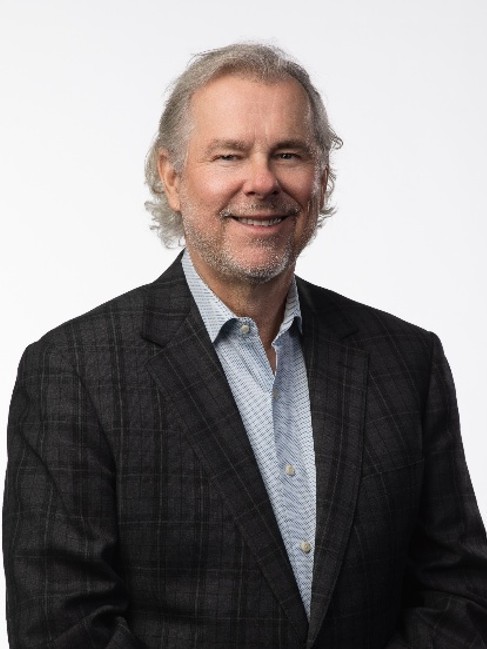
Technical Domain Lead for CEM, Lockheed Martin Aeronautics Company
Biography
Dr. Courtney is an electrical engineer with experience in computational electromagnetics (CEM), microwave theory, operations in anechoic chambers, RF and RCS measurements, and the analysis, design and optimization of commercial, low observable and high power-capable antennas. He received his BS and MS degrees at the University of South Carolina, and his PhD at Clemson University. Currently, with the Skunk Works, he is the Technical Domain lead for CEM. In this capacity, he works with a broad range of commercial and academic partners to identify promising technologies, execute collaborative research, and integrate new algorithms into existing codes and tools. He is a subject matter expert in the characterization of the electromagnetic properties of materials, with an emphasis on measurement accuracy and the reduction of uncertainty in material measurements. Dr. Courtney is a Life Senior Member of the Institute of Electrical and Electronic Engineers (IEEE).
Senior Resaerch Scientist and Team Leader, US Army Research Laboratory
Biography
Fikadu Dagefu is a Senior Research Scientist and Team Leader at the U.S. Army Research Laboratory (ARL). His research spans applied electromagnetics, wireless communications, and sensing, with a focus on developing intelligent, secure, and self-managing tactical wireless networks. At ARL, Dagefu leads the Autonomous Tactical Networking team, conducting foundational research in heterogeneous and low-probability-of-detection (LPD) communications across terrestrial, aerial, and satellite networks. His work exploits physical-layer technologies for electromagnetic signature control across spatial, spectral, and temporal domains, leveraging cross-layer optimization and machine learning to simultaneously manage realistic network traffic and precise RF signatures. Dagefu collaborates extensively across government, academia, and industry, including serving as a program verification and validation lead for multiple DARPA programs. A Senior Member of the IEEE, he has co-authored over 120 peer-reviewed publications, holds five patents, and serves as an Associate Editor for IEEE AWPL and IEEE APM. He is highly active in the APS, URSI, and COMSOC communities, and regularly mentors student interns, postdocs, and visiting scholars at ARL. He holds a B.Sc. from the University of Texas at Austin, alongside an M.Sc. and Ph.D. in electrical engineering from the University of Michigan.
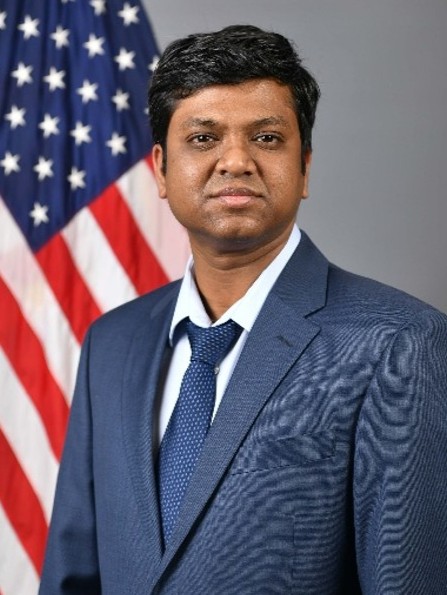
Senior Electronics Engineer and PI of HPM Antenna Program, US Air Force Research Laboratory
Biography
Dr. MD (Muhammed) Zuboraj is a Senior Electronics Engineer at Information and Spectrum Warfare Directorate at the Air Force Research Laboratory (AFRL). He is currently PI of HPM antenna program at AFRL, developing advanced high power microwave sources and antennas for US warfighters. Before joining at AFRL, he completed his postdoc at the Los Alamos National Laboratory (LANL). There, he worked as technical staff scientist at LANL and was an active member of Applied Electrodynamics (AOT-AE) group where he works on novel applications of electrodynamics such as particle accelerators, electron and ion beam dynamics, gamma-ray detectors, X-ray and THz sources, and high-gradient acceleration of particles. He completed his PhD in Electrical and Computer Engineering from The Ohio State University, on design of coupled transmission line-based novel slow wave structures for Traveling Wave Tubes (TWTs). His has decade long research experience intersecting diverse fields such as metamaterials, antennas and phased arrays, high power microwave sources, electron accelerators, ion sources and free electron lasers. He has published 15 peer-reviewed journals and more than 20 conference papers in different fields. He also serves as active reviewer of IEEE Transactions on Electron Devices, IEEE Transactions of Plasma Science, IEEE Transactions of Antennas and Propagation, Optics Express, Physical Review and Applied Physics Letters. He is also a senior member of IEEE and American Physical Society.
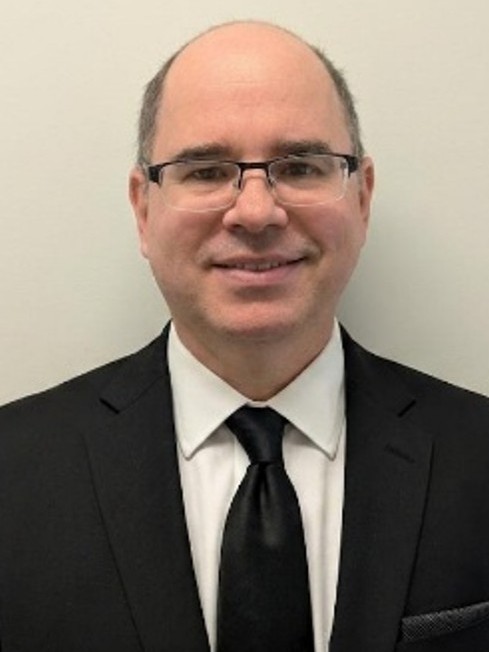
Head, Threat Mitigation Group, Suffield Research Centre
Defence Research and Development Canada
Biography
Dr. Scott E. Irvine received his B.Sc. in physics and mathematics from the University of Lethbridge in 2000, and his M.Sc. and Ph.D. in electrical and computer engineering from the University of Alberta in 2002 and 2007, respectively. He is with Defence Research and Development Canada (DRDC)–Suffield Research Centre in Medicine Hat, Alberta, Canada, where he has conducted defence related research over the past 17 years. Dr. Irvine is current the Head of the Threat Mitigation Group, the portfolio manager for Counter Explosive Threats. His specific areas of research in electromagnetics relate to threat detection and defeat, including handheld systems as well as autonomously deployed sensors and counter autonomy technologies.
Moderator
Professor, Director of the Centre for Applied Research in Defence and Dual-use Technologies (CARDD-Tech) at the University of Alberta
Biography
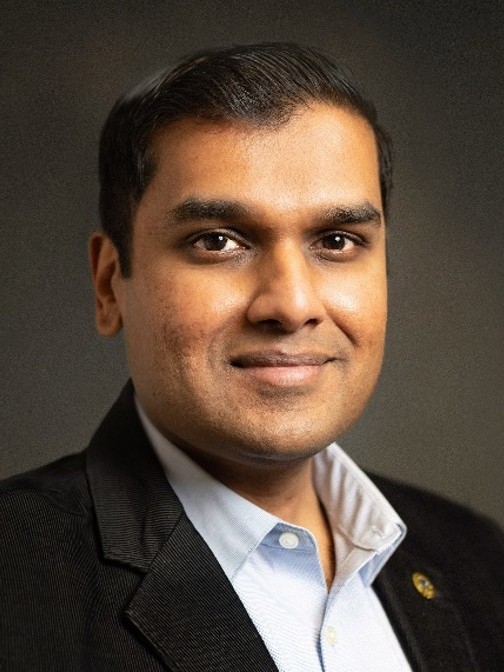
Ashwin Iyer is a Professor of ECE at the University of Alberta and holds the Senior Engineering Chair in Compact Communications and Sensing Platforms for Defence and Dual-use Applications. He is the founding Director of both the Centre for Applied Research in Defence and Dual-use Technologies (CARDD-Tech) and the Microwave, Millimetre Wave and MetaDevices (M3) Laboratory. He received his PhD in electrical engineering from the University of Toronto in 2009. He leads multiple projects with defence and adjacent industry in the areas of low-SWaPC antenna and sensor platforms. He has been associated with the IEEE AP-S for nearly 25 years and has served in many capacities, including as a member of AdCom, as a TPC Co-Chair for many instalments of the APS/URSI conference, and as a two-term Associate and two-term Track Editor for the IEEE Transactions on Antennas and Propagation.