



IEEE AP-S TC-2 Workshop - Phased Antenna Arrays and Reconfigurable Intelligent Surfaces (RIS)
Workshop Overview
| Workshop | Phased Antenna Arrays and Reconfigurable Intelligent Surfaces (RIS) |
|---|---|
| Workshop ID | HD-9 |
| Date | Sunday, 12 July 2026 |
| Time | 09:00 - 14:00 (proposed extended half-day) |
| Venue | AP-S/URSI 2026, Detroit, USA (specific room TBD) |
| Format | Invited talks (30 min including Q&A), three thematic blocks, two 15-min breaks |
| Audience | Open to all AP-S/URSI 2026 attendees; expected ~50 (academia, students, industry) |
| Organizers | IEEE AP-S TC-2 (Antenna Arrays and Systems) in cooperation with TC-4 |
Description
This workshop, organized by IEEE AP-S Technical Committee 2 (Antenna Arrays and Systems) in cooperation with TC-4 (Antennas and Wave-Manipulation Surfaces), brings together leading contributions on phased antenna arrays and reconfigurable intelligent surfaces (RIS), two technologies that are reshaping the design of next-generation wireless systems. The program is organized into three thematic blocks spanning the device, system, and engineering perspectives.
The first block focuses on the foundations and architectures of reconfigurable surfaces and arrays, covering surface-wave-assisted metasurfaces for beam steering and beam shaping, reactively loaded metasurfaces as a low-cost beamforming technology, and electronically reconfigurable transmitarray antennas for 5G and satellite communications.
The second block addresses system-level integration, applications, and emerging implementation technologies, with talks on wideband mm-wave RIS for 5G and beyond communication systems, additively manufactured FHE-enabled wireless arrays and reconfigurable intelligent surfaces for IoT and ISAC/JCAS applications, and electromagnetic skin engineering for smart electromagnetic environments.
The third block returns to array synthesis, digital architectures, and validation, with talks on intelligent reconfigurable array architectures for next-generation wireless systems, over-the-air characterization of active phased arrays using reverberation chambers, and phased-array validation techniques and methodologies.
The program is designed to foster exchange between academia and industry, and to provide graduate students and early-career researchers with a consolidated overview of the field and its open challenges.
Organizers
Workshop Chair: Diego Caratelli, Vice-Chair, IEEE AP-S Technical Committee 2 (Antenna Arrays and Systems); Eindhoven University of Technology / The Antenna Company, the Netherlands
Workshop Co-Chair: Alessio Monti, Chair, IEEE AP-S Technical Committee 4; Roma Tre University, Italy
Program at a Glance
| Time | Program Item |
|---|---|
| 09:00 | Welcome and introduction (Diego Caratelli) |
| Block I: Foundations and Architectures of Reconfigurable Surfaces and Arrays | |
| 09:00 - 09:30 | George V. Eleftheriades, University of Toronto, Canada Advanced Beam Manipulation with Metasurfaces and Related Structures |
| 09:30 - 10:00 | Anthony Grbic (or Malik Almunif), University of Michigan, USA Beamforming with Reactively Loaded Metasurfaces |
| 10:00 - 10:30 | Francesco Foglia Manzillo, CEA-Leti, France Advanced Beam-Steering and Polarization-Agile Transmitarray Antennas for 5G and Satellite Communications: Innovative Architectures and System-Level Trade-Offs |
| 10:30 - 10:45 | Coffee break |
| Block II: System-Level Integration, Applications, and Emerging Implementation Technologies | |
| 10:45 - 11:15 | Manos M. Tentzeris (remote presentation from Greece), Georgia Institute of Technology, USA Autonomous Additively Manufactured FHE-Enabled Wireless/5G+ Antenna Arrays & Modules for IoT, SmartAg, Industry 4.0 and AI-enabling ISAC/JCAS Applications |
| 11:15 - 11:45 | Atif Shamim, King Abdullah University of Science and Technology (KAUST), Saudi Arabia Enabling Next Generation Wireless Communication through mm-Wave Reconfigurable Intelligent Surface (RIS) |
| 11:45 - 12:15 | Giacomo Oliveri, University of Trento, Italy Electromagnetic Skin Engineering: Toward Intelligent Wave Control in Smart EM Environments |
| 12:15 - 12:30 | Coffee break |
| Block III: Array Synthesis, Digital Architectures, and Validation | |
| 12:30 - 13:00 | Yuandan Dong, University of Electronic Science and Technology of China (UESTC), China Intelligent Reconfigurable Array Architectures for Next-Generation Wireless |
| 13:00 - 13:30 | Teun van den Biggelaar, ANTENNEX, the Netherlands Over-the-Air Characterization of Active Phased Array Systems |
| 13:30 - 14:00 | Nelson J.G. Fonseca, Anywaves, France Innovative Solutions for the Validation of Phased Array Antennas in the NewSpace Era |
Detailed Program
Block I: Foundations and Architectures of Reconfigurable Surfaces and Arrays
Device-level foundations of engineered surfaces and reconfigurable apertures, covering surface-waveassisted metasurfaces, reactively loaded metasurfaces, and electronically reconfigurable transmitarrays.
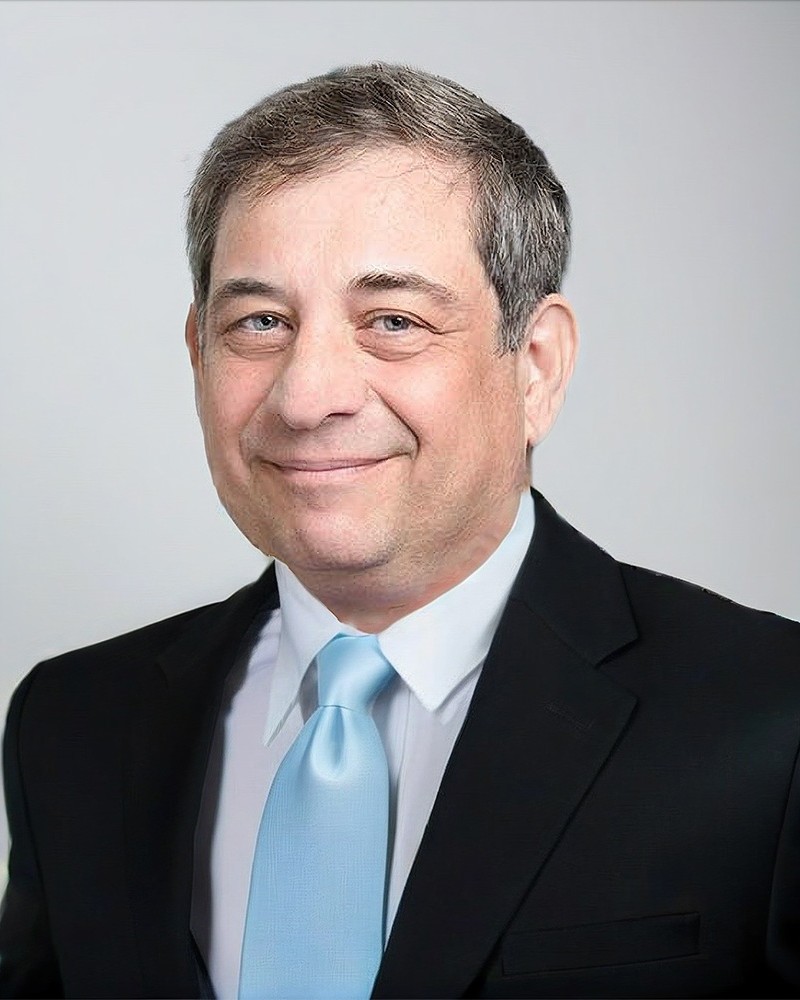
09:00 - 09:30, George V. Eleftheriades (University of Toronto, Canada)
Advanced Beam Manipulation with Metasurfaces and Related Structures
Abstract: Recent advances in metasurfaces will be presented for achieving electromagnetic wave beam-steering and beam-shaping in the far zone. A paradigm shift will be presented on how to implement engineered surfaces that can provide complete control of the transmitted or reflected waves, thus enabling both beam-steering and beam-shaping, without the need of any loss or gain. The key enabling feature is the utilization of surface waves to change the phase of the manipulated waves, while allowing for amplitude control through power redistribution. To demonstrate this concept, several surface-wave-assisted metasurfaces will be discussed, including architectures for steered, shaped, and multiple beams, electrically thin reflectors that minimize frequency-dependent beam squint, and electronically reconfigurable prototypes. New phased-array topologies with reduced complexity and cost will also be introduced.
Bio: George V. Eleftheriades is a Professor in the Department of Electrical and Computer Engineering at the University of Toronto Canada where he holds the Velma M. Rogers Graham Chair in Engineering. Prof. Eleftheriades introduced the concept of using transmission lines to realize negative-index metamaterials in 2002. More recently, he pioneered “field discontinuity” metasurfaces, 2D analogues of metamaterials, and their antenna applications. For his contributions he was awarded the 2025 IEEE Electromagnetics Award. Previously, professor Eleftheriades received the 2008 IEEE Kiyo Tomiyasu Technical Field Award, the 2015 IEEE AP-S John Kraus Antenna Award, and the 2019 IEEE Antennas and Propagation Society's Distinguished Achievement Award. He is an IEEE Fellow, a Fellow of the Canadian Academy of Engineering, a Fellow of the Royal Society of Canada (Academy of Sciences), and an International Member of the US National Academy of Engineering. His research group focuses on electromagnetic and optical metamaterials, metasurfaces for 6G and radars, antennas and components for wireless communications, novel antenna beam-steering techniques, far-field super-resolution imaging, plasmonic and nanoscale optical components, and fundamental electromagnetic theory.

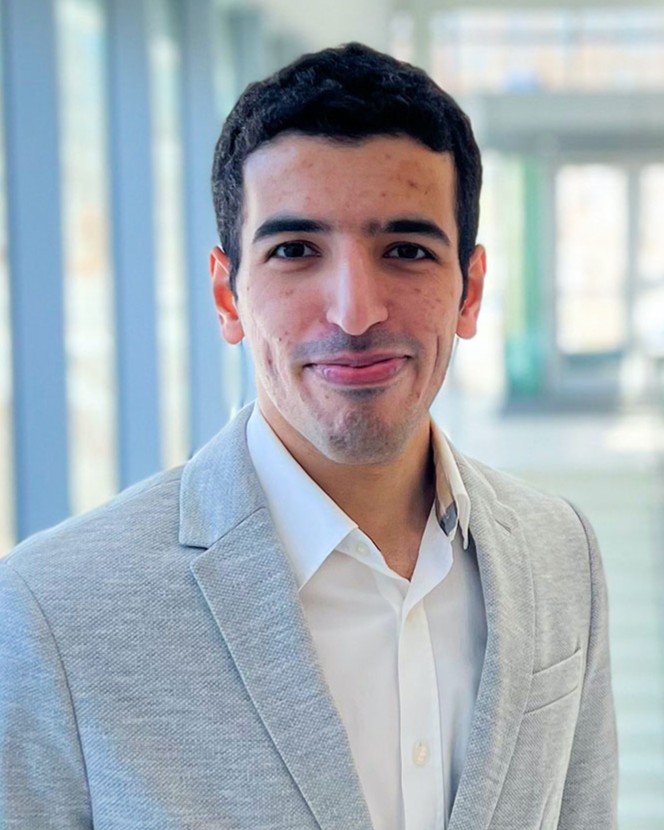
09:30 - 10:00, Anthony Grbic (or Malik Almunif) (University of Michigan, USA)
Beamforming with Reactively Loaded Metasurfaces
Abstract: The talk describes how a metasurface connected to reactive loads or networks can serve as a low-cost beamforming technology. The reactively loaded metasurface consists of a grid of subwavelength unit cells connected to individual ports. Some ports are directly excited while the remaining ports are terminated in reactive loads and function as parasitic radiators. Strong coupling between the unit cells, tailored by the reactive loads, allows energy to be shuttled across the aperture to enable beam steering, beam shaping, and multiple beams driven by separate feeds.
Bio: Anthony Grbic Anthony Grbic received the B.A.Sc., M.A.Sc., and Ph.D. degrees in Electrical Engineering from the University of Toronto, Canada, in 1998, 2000, and 2005, respectively. In 2006, he joined the Department of Electrical Engineering and Computer Science, University of Michigan, Ann Arbor, MI, USA, where he is currently the John L. Tishman Professor of Engineering. His research interests include engineered electromagnetic structures (metamaterials, metasurfaces, frequency selective surfaces, photonic bandgap structures), antennas, microwave circuits, time varying and space-time varying electromagnetic systems, cylindrical vector beams, wireless power transmission, and analytical electromagnetics/optics. Dr. Grbic is a Fellow of the IEEE. He was an IEEE Microwave Theory and Techniques Society Distinguished Microwave Lecturer from 2022-2025 and an Associate Editor for IEEE Antennas and Wireless Propagation Letters from 2010 to 2015. He was the recipient of an AFOSR Young Investigator Award, NSF Faculty Early Career Development Award and the Presidential Early Career Award for Scientists and Engineers. He also received an Outstanding Young Engineer Award from the IEEE Microwave Theory and Techniques Society, a Henry Russel Award from the University of Michigan, and a Booker Fellowship from the United States National Committee of the International Union of Radio Science.
Bio: Malik Almunif is a Ph.D. candidate at University of Michigan, Ann Arbor. He received his B.S. degree in Electrical Engineering, with first honors degree, from Taibah University in 2018, and his M.Sc. degree in Electrical and Computer Engineering from University of Michigan, Ann Arbor in 2022. He previously worked at the UM-KACST joint center for microwave sensor technology. His research focuses on metasurfaces, metamaterials, and advanced antenna systems, with an emphasis on beamforming technologies. Mr. Almunif received second place award in the student paper competition at the 2022 IEEE International Symposium on Antenna & Propagation.

10:00 - 10:30, Francesco Foglia Manzillo (CEA-Leti, France)
Advanced Beam-Steering and Polarization-Agile Transmitarray Antennas for 5G and Satellite Communications: Innovative Architectures and System-Level Trade-Offs
Abstract: This talk presents recent advances in the modeling, design, and experimental validation of electronically reconfigurable transmitarray antennas based on p-i-n diodes operating in frequency bands of interest for 5G and satellite communications. Several architectures enabling dynamic beamforming and polarization agility with coarse phase quantization and reduced hardware complexity are reviewed and quantitatively compared in terms of antenna performance and energy efficiency, with implementation trade-offs discussed. Novel high-gain, low-profile architectures using sparse arrays as primary feeds are described, showing that, by co-optimizing the feed design and the transmitarray, the overall antenna thickness can be reduced to only a few wavelengths while maintaining high gain and wide-angle scanning capabilities. Finally, the proposed transmitarrays are benchmarked against conventional phased-array architectures from a system-level perspective, highlighting their respective advantages and limitations in terms of scanning capability, power consumption, efficiency, and integration complexity for next-generation wireless communication systems.
Bio: Francesco Foglia Manzillo received his M.Sc. in Electronics Engineering from the University of Naples "Federico II" in 2012, and his Ph.D. from the University of Rennes 1, France, in 2017. He held research positions at Delft University of Technology, NXP Semiconductors, and the University of Michigan during his studies. Since 2017, he has been with CEA-Leti in Grenoble, focusing on antenna arrays, electromagnetic surfaces, millimeter-wave integration, and beamforming systems. He has co-authored over 90 publications, holds 7 patents, and has contributed to more than 16 national and European R&D projects. He was the co-recipient of the EuMC Microwave Prize at EuMC 2025, the Best Applied Technology Antenna Paper Award at EuCAP 2024, the Young Engineer Prize at EuMC 2021, the Best Innovation Award at the ESA Antenna Workshop in 2018.
10:30 - 10:45, Coffee break
Block II: System-Level Integration, Applications, and Emerging Implementation Technologies
How phased-array and RIS technologies translate into deployed wireless systems, with talks on wideband mm-wave RIS prototypes, additively manufactured FHE-enabled modules, and electromagnetic skins for smart environments.
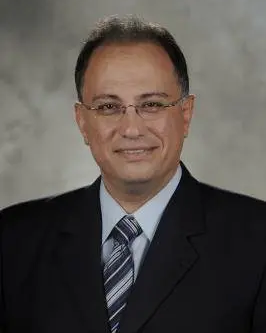
10:45 - 11:15, Manos M. Tentzeris (remote presentation from Greece) (Georgia Institute of Technology, USA)
Autonomous Additively Manufactured FHE-Enabled Wireless/5G+ Antenna Arrays & Modules for IoT, SmartAg, Industry 4.0 and AI-enabling ISAC/JCAS Applications
Abstract: Inkjet- and 3D-printed antennas and antenna arrays, interconnects, smart encapsulation and packages, RF electronics, RFIDs, microfluidics, and sensors fabricated on glass, PET, paper, and other flexible substrates are introduced as a system-level solution for ultra-low-cost mass production of mm-wave and sub-THz modules and metasurfaces for communication, energy harvesting, and sensing applications, setting the foundation for massively scalable ISAC/JCAS systems. The talk covers fully integrated printable FHE-enabled broadband wireless modules, including characterization of 3D-printed materials up to Eband, novel 3D-printable interconnects, microinductors, microspiral antenna MIMOs up to 300 GHz, and cavities for IC embedding, as well as fully printable structures for self-monitoring and anti-counterfeiting packages. Energy sources for near-perpetual RF modules are discussed, with energy harvesting approaches involving thermal, EM, vibration, and solar forms, and the first lens-enabled EM energy harvesters with near-hemispherical harvesting capability up to multiple tens of mW. The presentation includes shape-changing 4D-printed (origami) phased arrays, reflectarrays, and mm-wave wearable antennas, ultra-broadband inkjet-printed nanotechnology-based backscattering modules, and miniaturized printable wireless sensors for IoT and smart-agriculture applications. The talk closes with solutions for the “5S Challenges” (Scalability, Sustainability, Speed, Security, and Smartness) and future directions in environmentally friendly transient “green” RF electronics, smart-skin conformal sensors, and massively scalable tile-by-tile RFID-enabled autonomous reconfigurable intelligent surfaces.
Bio: Professor Tentzeris was born and grew up in Piraeus, Greece. He graduated from Ionidios Model School of Piraeus in 1987 and he received the Diploma degree in Electrical Engineering and Computer Science (Magna Cum Laude) from the National Technical University in Athens, Greece, in 1992 and the M.S. and Ph.D. degrees in Electrical Engineering and Computer Science from the University of Michigan, Ann Arbor in 1993 and 1998. He is currently Ed and Pat Joy Chair Professor. From 2016-2023, he served as Ken Byers Professor in the area of flexible electronics with the School of ECE, Georgia Tech, and he has published more than 850 papers in refereed Journals and Conference Proceedings, 5 books and 25 book chapters. He has served as the Head of the Electromagnetics Technical Interest Group of the School of ECE, Georgia Tech. Also, he has served as the Georgia Electronic Design Center Associate Director for RFID/Sensors research from 2006-2010 and as the GT-Packaging Research Center (NSF-ERC) Associate Director for RF research and the leader of the RF/Wireless Packaging Alliance from 2003-2006. Also, Dr. Tentzeris is the Head of the A.T.H.E.N.A. Research Group (20 students and researchers) and has established academic programs in 3D Printed RF electronics and modules, flexible electronics, origami and morphing electromagnetics, Highly Integrated/Multilayer Packaging for RF and Wireless Applications using ceramic and organic flexible materials, paper-based RFIDs and sensors, inkjet-printed electronics, nanostructures for RF, wireless sensors, power scavenging and wireless power transfer, Microwave MEM's, SOP-integrated (UWB, mutliband, conformal) antennas and Adaptive Numerical Electromagnetics (FDTD, MultiResolution Algorithms). He was the 1999 Technical Program Co-Chair of the 54th ARFTG Conference and he is currently a member of the technical program committees of IEEE-IMS, IEEE-APS and IEEE-ECTC Symposia. He was the TPC Chair for the IMS 2008 Conference and the Co-Chair of the ACES 2009 Symposium. He was the General Co-Chair of the inaugural 2025 IEEE International Conference on Additively Manufactured Electronic Systems (AMES) in Atlanta, of the 2023 IEEE Wireless Power Technology Conference and Expo (WPTCE) in San Diego and of the 2019 IEEE APS Symposium in Atlanta and the Chairman for the 2005 IEEE CEM-TD Workshop. He was the Chair of IEEE-CPMT TC16 (RF Subcommittee) and he was the Chair of IEEE MTT/AP Atlanta Sections for 2003. He is a Fellow of IEEE, a member of MTT-15 Committee, an Associate Member of European Microwave Association (EuMA), a Fellow of the Electromagnetics Academy, and a member of Commission D, URSI and of the Technical Chamber of Greece. He is the Founder and the inaugural Chair of IEEE MTT-S TC- 24 (RFID Technologies). He is one of the IEEE EPS Distinguished Lecturers and he has served as one IEEE CRFID DIstinguished Lecturer and as one IEEE MTT-Distinguished Microwave Lecturers (DML).
11:15 - 11:45, Atif Shamim (King Abdullah University of Science and Technology (KAUST), Saudi Arabia)
Enabling Next Generation Wireless Communication through mm-Wave Reconfigurable Intelligent Surface (RIS)
Abstract: The mm-wave 5G and beyond communication systems significantly improve the data rate, user capacity, and latency; however, the electromagnetic wave propagation suffers from high atmospheric attenuation compared with the sub-6 GHz bands. The quality of wireless communication is thus severely affected in environments with multiple obstacles, and coverage is typically limited to line of sight. Reconfigurable intelligent surfaces (RIS) can help by providing a secondary line of sight: RIS is a specially designed periodic structure that can be reconfigured to reflect the EM signal in the desired direction, making the wireless environment controllable and programmable. Despite the growing interest in RIS and the substantial theoretical work reported by the communication society, there is still a dearth of published works demonstrating practical implementations and experimental results, particularly for wideband RIS covering complete mm-wave 5G and beyond bands. This talk first introduces the fundamental concepts of RIS, then presents the EM design, prototyping steps, and complete experimental characterization of a wideband RIS covering the mm-Wave 5G band (22.5 - 29.5 GHz, ~27% bandwidth) with a beam scanning capability of 50°. A wideband mm-Wave RIS design that is fully screen-printed and uses novel printed switches based on vanadium dioxide phase-change material is then presented, followed by a RIS design realized through an optically transparent metallic ink.
Bio: Atif Shamim received his MS and PhD degrees in electrical engineering from Carleton University, Canada in 2004 and 2009 respectively. He was an NSERC Alexander Graham Bell Graduate scholar at Carleton University from 2007 till 2009 and an NSERC postdoctoral Fellow in 2009-2010 at Royal Military College Canada and KAUST. In August 2010, he joined the Electrical and Computer Engineering Program at KAUST, where he is currently a Full Professor and Principal Investigator of IMPACT Lab. He was an invited researcher at the VTT Micro-Modules Research Center (Oulu, Finland) in 2006. His research work has won best paper awards in IEEE ICMAC 2025 and 2021, IEEE IMS 2016, IEEE MECAP 2016, IEEE EuWiT 2008, first prize in IEEE AP-S Design Competition 2022 and IEEE MTT-S Design Competition 2024, IEEE IMS 2019 3MT competition, finalist/honorable mention prizes in IEEE APS 2023, IEEE AP-S Design Competition 2020, IEEE IMS 2017 (3MT competition), IEEE IMS 2014, IEEE APS 2005 and R. W. P. King prize for journal papers in IEEE TAP 2017 and 2020. He has served as the Distinguished Lecturer for IEEE AP-S (2022-2024). He has won the Kings Prize for the best innovation of the year (2018) for his work on sensors for the oil industry. He was given the Ottawa Centre of Research Innovation (OCRI) Researcher of the Year Award in 2008 in Canada. His work on Wireless Dosimeter won the ITAC SMC Award at Canadian Microelectronics Corporation TEXPO in 2007. Prof. Shamim also won numerous business-related awards, including 1st prize in Canada's national business plan competition and was awarded OCRI Entrepreneur of the year award in 2010. He is an author/co-author of 1 book, 3 book chapters and more than 400 international publications, an inventor on 40 patents and has given over 130 invited talks at various international forums. His research interests are in innovative antenna designs and their integration strategies with circuits and sensors for flexible and wearable wireless sensing systems through a combination of CMOS and additive manufacturing technologies. He is a Fellow of IEEE and is currently serving as the Editor-in-Chief of IEEE Journal of Electromagnetics, RF and Microwaves in Medicine and Biology (J-ERM). He has previously served on the editorial board of IEEE Transactions on Antennas and Propagation (2013-2019), IEEE J-ERM (2020-2024), and as a Guest Editor for IEEE AWPL Special issue (2019). He is currently serving as the founding Chair of IEEE AP-S TC-8 (Wireless Communication), Vice Chair of IEEE APS MGA Committee, member of IEEE APS Fellow Evaluation committee and also leads the student travel grants committee. He has served as the AdCom member for IEEE AP-S (2025). He has also previously served on IEEE TC on Antenna Measurements (AP-S), Microwave Controls (MTT-S 13), and Additive Manufacturing (CRFID). He founded the first IEEE AP/MTT chapter in Saudi Arabia (2013). Find out more details at https://cemse.kaust.edu.sa/impacts
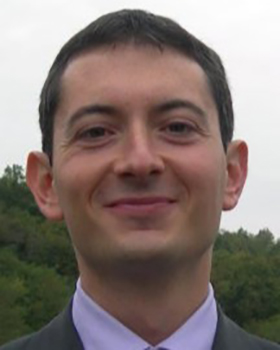
11:45 - 12:15, Giacomo Oliveri (University of Trento, Italy)
Electromagnetic Skin Engineering: Toward Intelligent Wave Control in Smart EM Environments
Abstract: The capability to engineer electromagnetic wave propagation through advanced yet cost-effective technologies has opened the way to a broad spectrum of transformative applications in Smart Electromagnetic Environments. Within this framework, Electromagnetic Skins have emerged as a powerful enabling technology, offering new opportunities for the control of wave propagation in wireless communication and sensing systems. Realizing these capabilities has required extending and reinterpreting the traditional concept of metasurfaces, both in terms of achievable functionalities and underlying design methodologies. Despite the remarkable progress achieved in recent years, several fundamental challenges remain open, particularly at the physical-layer level. This talk presents an overview of recent trends and advances in the synthesis, engineering, and application of wavemanipulation devices for wireless communications, covering constrained design methodologies based on non-radiating current distributions, advanced electromagnetic field control for both fixed and mobile wireless links, and the development of next-generation low-cost Electromagnetic Skins for future integrated sensing and communication systems.
Bio: Giacomo OLIVERI (IEEE Fellow) received the B.S. and M.S. degrees in Telecommunications Engineering and the PhD degree in Space Sciences and Engineering from the University of Genoa, Italy, in 2003, 2005, and 2009 respectively. He is currently an Associate Professor at the Department of Civil, Environmental, and Mechanical Engineering, University of Trento, and a Board Member of the ELEDIA Research Center. Moreover, he was Adjunct Professor at CentraleSupélec and member of the Laboratoire des signaux et systèmes (L2S)@CentraleSupélec Gif-sur-Yvette (France) from 2015 to 2020. He was a visiting researcher at L2S in 2012, 2013, and 2015, Invited Associate Professor at the University of Paris Sud, France, in 2014, and visiting professor at Université Paris-Saclay in 2016 and 2017. He is the author/co-author of over 450 peer reviewed papers on international journals and conferences. His research work is mainly focused on electromagnetic direct and inverse problems, antenna array synthesis, and multifunctional metamaterials and metastructures engineering. Prof. Oliveri served as an Associate Editor of the IEEE Antennas and Wireless Propagation Letters (2016-2022) and of the IEEE Journal on Multiscale and Multiphysics Computational Techniques (2017- 2023), and he is AE of EPJ Applied Metamaterials, of the International Journal of Antennas and Propagation, of the International Journal of Distributed Sensor Networks, of the Microwave Processing journal, and of the Sensors journal. He is the Chair of the IEEE AP/ED/MTT North Italy Chapter. He has been serving as the Chair of the AP-S IEEE Press Liaison Committee, as a Member of the IEEE AP-S Field Award Subcommittee, as a Member of the IEEE AP-S Membership and Benefit Committee, and as a Member of the IEEE AP-S Fellow Evaluation Committee. He was elected as an IEEE AP-S AdCom Member for the triennium 2025-27.
12:15 - 12:30, Coffee break
Block III: Array Synthesis, Digital Architectures, and Validation
The design, build, and validate cycle of digital and active phased arrays, with talks on intelligent reconfigurable array architectures, over-the-air characterization of active phased arrays, and phasedarray validation techniques.

12:30 - 13:00, Yuandan Dong (University of Electronic Science and Technology of China (UESTC), China)
Intelligent Reconfigurable Array Architectures for Next-Generation Wireless
Abstract: This talk covers recent advances in reconfigurable array architectures for next-generation communication, sensing, radar, and satellite systems. Starting from intelligent small antennas with wave steering, multiple novel phased arrays are presented, including metasurface antennas with dynamic amplitude and phase control, phased arrays utilizing amplitude modulation, and leaky-wave antennas with combined amplitude and frequency modulation for dispersion manipulation. The discussion extends to digital arrays incorporating phase and polarization modulation, 2D digital arrays, and dual-polarized phased arrays with full phase and amplitude control. Finally, a beam-switchable digital conformal array with metasurface phase compensation is discussed. Collectively, these architectures enable wideband, multi-beam, and wide-angle scanning performance. The talk highlights how such reconfigurable and intelligent arrays, bridging phased arrays, digital arrays, and conformal designs, can be integrated into future wireless systems to enhance beamforming flexibility and operational robustness beyond conventional phased arrays.
Bio: Yuandan Dong received the Ph.D. degree from the department of electrical engineering, University of California at Los Angeles (UCLA) in 2012. From 2012 to 2016, he was working as a Senior Engineer with the Research and Development Hardware Department, Qualcomm, San Diego, CA, USA. Since Oct. 2017, he has been a Full Professor with the University of Electronic Science and Technology of China (UESTC), Chengdu. He has authored or coauthored more than 380 journal articles and conference papers, which receive more than 9700 citations. He has been listed as an Elsevier highly cited researcher for the last five years. He holds more than 150 patents including six international patents. He has served as an Associate Editor for the IEEE TRANSACTIONS ON ANTENNAS AND PROPAGATION since 2021. He and his team have developed multiple RF products including acoustic wave filters, antenna tuners, and antennas, which are very widely shipped and applied in mobile devices.

13:00 - 13:30, Teun van den Biggelaar (ANTENNEX, the Netherlands)
Over-the-Air Characterization of Active Phased Array Systems
Abstract: Modern complex active phased-array systems typically have a multitude of beamforming settings, and to ensure reliable and high-quality performance, these settings have to be measured and validated. The RFICs and antennas of these systems are typically tightly integrated, which makes the characterization of such arrays non-trivial. This presentation explains the principles of the reverberation chamber (RC) and how this type of chamber can be used to characterize the active RF circuitry while it is connected to and loaded by an antenna, in a fast and accurate manner. Several over-the-air measurement results are presented and compared against reference measurements acquired using established conducted techniques. This paves the way for a redefined characterization workflow, in which the active RF circuitry of the phased array is first validated in a reverberation chamber and the radiation patterns are then validated in an anechoic chamber as a second step.
Bio: Teun van den Biggelaar received his MSc and PhD degree in Electrical Engineering (EE) with distinction from the Eindhoven University of Technology (TU/e), the Netherlands, in 2016 and 2020, respectively. During his PhD, he worked on a project supported by NXP Semiconductors in Nijmegen, the Netherlands and worked as a guest researcher at the National Institute of Standards and Technology (NIST) in Boulder, USA. Teun worked for a period of two years at Ericsson in Gothenburg, Sweden, as Antenna Developer in the millimeterwave team of the Antenna Systems and Technology division. From 2023, he is CTO and co-founder of ANTENNEX in Eindhoven, the Netherlands. Starting from 2026, he is elected Chair of IEEE P3720 Recommended Practice for Electromagnetic Measurements Using Reverberation Chambers.
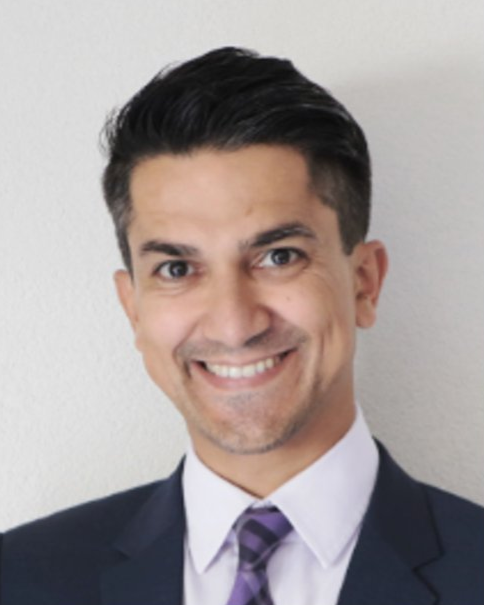
13:30 - 14:00, Nelson J.G. Fonseca (Anywaves, France)
Innovative Solutions for the Validation of Phased Array Antennas in the NewSpace Era
Abstract: Phased arrays are emerging as a candidate solution for a number of applications in the NewSpace era, from communications to radar systems in low Earth orbit (LEO) satellite constellations. This calls for scale production and requires innovative ideas for the validation and acceptance tests of such complex antenna systems. Anywaves is currently developing phased array antennas in X-band and Ka-band, addressing future needs of data downlink sub-systems, inter-satellite links, as well as advanced radar systems. In this context, time-efficient validation techniques have been explored and have shown promising results in helping to identify possible defects at an early stage of integration. The presentation will review some of the preliminary results obtained using infrared thermography on an X-band phased array prototype.
Bio: Nelson J. G. Fonseca (Fellow, IEEE) received the M.Eng. degree from Ecole Nationale Supérieure d'Electrotechnique, Electronique, Informatique, Hydraulique et Télécommunications (ENSEEIHT), Toulouse, France, in 2003, the M.Sc. degree from the Ecole Polytechnique de Montreal, Quebec, Canada, also in 2003, and the PhD degree from Institut National Polytechnique de Toulouse – Université de Toulouse, France, in 2010, all in electrical engineering. He currently works as Chief Innovation Officer at Anywaves, Toulouse, France, contributing to the development of their custom space-segment antennas portfolio. He is also the founding director of 3SPACE Innovation, Paris, France, a startup developing novel ground-segment and terrestrial wireless communication antenna systems. His research interests include multiple beam antennas for space missions, beamformer theory and design, ground terminal antennas and novel manufacturing techniques. He has authored or co-authored more than 360 papers in peer-reviewed journals and conferences and has over 50 patents issued or pending. Dr. Fonseca is currently serving as Associate Editor for the IEEE Transactions on Antennas and Propagation and as Topic Editor for the IEEE Journal of Microwaves. He served as Associate Editor for the Transactions on Microwave Theory and Techniques from 2020 to 2022 and was co-Guest Editor of two focused issues of the IEEE Microwave Magazine in 2022 and 2023. He is serving as Vice Chair of the newly founded AP-S Technical Committee on Antenna Modeling, Design, Fabrication (TC-1) and as Chair of the EurAAP Working Group on Software, Modelling and AI-related Tools (SMArT). He is also a Member of the IEEE Fellow Committee. He received several prizes and awards, including the Best Applied Technology Antenna Paper Award at EuCAP 2022 and the 2024 IEEE Journal of Microwaves Best Paper Award.